

I had an interesting phone conversation with angling legend Tom Rosenbauer earlier this year. Tom, who has been the face of Orvis fly fishing for as far back as I can remember, called and wanted to talk trout fishing. Specifically, he asked me what folks need to do to become truly great fly fishers for trout.
I thought it over, and then thought about it some more, and finally shared the following list with Tom.
- Intent. That’s the first step. I won’t say that it’s impossible to become an exceptional angler without making a conscious choice to do so, but my personal experience is that it’s really, really hard to become a great fisherman without first deciding it’s a goal worth achieving.
- Passion is next. Passion is like oxygen for trout fishermen. With it, the sky is the limit. Without it, it’s almost unthinkable that someone would put in the time and effort necessary to arrive at the pinnacle of our sport. Passion not only pushes us to improve but fuels our success on the water.
- Awareness is vital. While I’ve written about awareness a fair amount in the past, I’m always happy to bring it up again. The best anglers I know invariably pay attention to everything around them. They soak it all in; the currents, the insects, the position of the sun, the birds, the weather, and a thousand other visual and auditory cues that help them choose the right technique and the right fly for that particular moment. Without awareness, an angler is essentially flying blind. It’s the single most important skill we can cultivate.
- Casting is also essential. Or to be more accurate, good casting is essential. Knowing how to cast, and how to cast well, is a prerequisite for putting the fly in front of the fish and then achieving the desired presentation. Someone can be both an effective angler and a poor caster, but there’s not a fly fisher alive who can reach his or her ultimate ceiling without putting in enough time on the practice field.
- Understand trout. And not in a cursory way, but in a serious, “I know where this fish lives, and how it moves, and what it eats, and how it interacts with its environment, and how it avoids predators, and what it needs to live and thrive” way that allows us to overcome our quarry’s innate defenses and convince it to sample a fly that it really shouldn’t.
- Understand bugs. After all, bugs are the ultimate fish food. No one should be surprised that trout know what the local bugs look like, and how they move, and when they’re likely to be available. Which, of course, doesn’t meant that a great angler needs an advanced degree in entomology. It does mean, however, that he or she needs to be extremely well-versed in the basics. And if you don’t believe me, think about how you’d react if you went to your favorite restaurant and ordered a T-Bone, only to have the server drop off a hunk of mystery meat that slowly crawled across your plate. When we truly understand insects, we know how, where and when to present flies that will appeal to the trout.
- Generalists. That’s right, the very best fly fishers become generalists before they become specialists. Show me an outstanding fly fisher and I’ll show you someone who can fish dry flies during a hatch, and nymphs when there’s nothing going on up top, along with streamers and wet flies whenever the conditions warrant. The best anglers have a solid foundation in every aspect of fly fishing, and are equally adept with a wide variety of techniques and styles.
- Tie flies. A great angler understands the importance of tying his or her own flies. Fly tying is the best way to develop a solid understanding of fly patterns and fly choice, and it also helps ensure that we always have the right fly on hand.
- Time on the water. There are shortcuts — magazine articles, and fly fishing schools, and books, and YouTube videos, and online forums, not to mention paying for a guide — but ultimately there are no substitutes for spending time on the water. The very best fly fishers spend an inordinate amount of time fishing. That’s just the way it works, and there’s no way for anyone to reach their full potential without investing the requisite time and energy.
- Ask questions. Curiosity may have killed the cat, but it ultimately helps us become better anglers. Every time a neophyte has a chance to fish with a talented fly fisher, he or she should ask as many relevant questions as possible. (Without, I should add, crossing the line and becoming a pest.) Surprisingly, that same approach also works for people who are fishing alone. What questions should we ask ourselves? Well, I was taught to ask “what am I seeing here?” and “what is it teaching me?” When we think about what we’re observing and how it’s relevant to our time on the water, we automatically improve our angling.
- Listen. The best fly fishers not only hang out with other stellar anglers, but they typically have a long history of listening more than they talk. That’s not always an easy skill to master, but it’s an important one to cultivate.
- Concentration. Of all the traits I’ve mentioned so far, this may be the one where genetics plays the biggest role. Some people seem to come from the womb with the ability to focus hard-wired into their very essence. Other people struggle when it comes to focus and concentration. All I can say is that the most advanced anglers employ a singular — even predatory — focus when they’re on the water. As best as I can tell, that’s something you’re either born with or you aren’t …
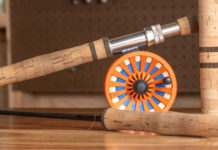
So that’s about it. Before I wrap up, though, I should mention that Tom and I also discussed some things that I intentionally left off my list. Gear was one. While we all love good fly fishing gear, there’s not a fly rod or reel or pair of wader on the planet that will take an average angler and turn him or her into a stellar fly fisher.
The same is true of all the various techniques that we employ. They’re important, but they’re not what separates the best from the rest.
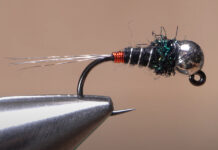
And finally, there are flies. One of the most common questions I’m asked on the water is “what are you getting ‘em on?” Unfortunately, too many people believe that there is a “magic fly” — a fly that, at that particular moment and under those particular conditions, will guarantee their success. Truth be told, there is no such thing.
Of course, the very best anglers learned that lesson early on in their fly fishing career. Which is why so many of them will respond to “what are you getting ‘em on” with more honesty and candor than you’d expect from a fellow angler.
“A good drift.”
Credit: Source link